

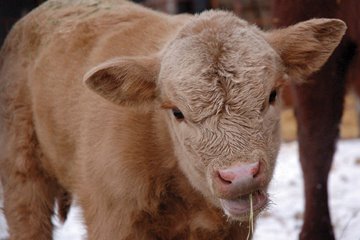
Besides calving, the most stressful period in the life of a calf is at weaning. This time period is vital to the cow-calf producer also. Weaning is the end of the production process for most operators and represents the majority of annual income. Given the challenging economic times we are currently in, it is critically important to focus intently on those periods and those procedures that have significant, direct effects on performance and profitability. Minimizing the stress the calf faces helps ensure that the year’s work was not wasted and the calf continues through the production process to a consumer’s plate.One of the easiest ways to reduce stress at weaning is to minimize other management processes accomplished at the same time. Pre-weaning practices such as castration, dehorning and vaccination are all procedures that can be implemented during preconditioning. By minimizing the number of procedures used at weaning, and thereby the amount of stress on calves, disease occurrence can be minimized. Remember that moderate to high stress levels will suppress the immune system which will make the influence of disease much greater.
Let’s examine several issues concerning management at this point in time to help understand the importance of this period.
Weaning Strategies and Procedures
Weaning of beef calves can take quite a number of forms. Probably, the most common is for the producer to take a look at his herd about this time of the year and say to himself, “yeah, there’s three or four in there that need to go.” Another motivation is when he’s going over his books and realizes he has a note payment he needs to make or other bills that need to be paid. In any case, at this point they pen the cattle as best they can, sort out the calves that they feel are of appropriate size and haul them to the auction barn. Subsequently, these calves are then weaned on a truck headed to another pasture or to a feedlot – probably the worst place possible. Research has shown that cattle managed in this manner have a dramatically higher rate of sickness and death loss due to the stress with an overall group of cattle managed in this was highly likely to lose money.
Other operations are more structured, sorting weaned cattle off the cows and subsequently handling processing and feeding over a period of time. Sickness and death loss following weaning robs both calf producers and cattle feeders of potential profits. The newly weaned calf has not acquired adequate immunity to the variety of diseases that plague the beef industry. At weaning and/or shipping, the calf is usually subjected to various stresses, in addition to being separated from its mother, that contribute to disease outbreaks. A program for minimizing weight loss, sickness, and death in newly weaned calves should include:
- minimizing stress
- adequate nutrition
- immunization against common disease
- parasite control
- treatment of sick cattle.
Check Out Facilities
Handling corrals and the feedlot pens will require some maintenance. Do it ahead of time so that when the herd is gathered and sorted, all goes as smoothly as possible. The checklist here might include:
- Repair fences, feedbunks, feeders, gates and hinges.
- Remove last year’s accumulated manure, fill in holes and ensure drainage will be adequate.
- Remove obstacles such as rocks, barbed wire, baler twine, broken boards or any other obstacle cattle can get tangled up in.
- Clean out the feedbunks and waterer.
- Do not forget your hospital pen and the alleys and gates leading to it.
Activities here are designed to familiarize the calf to dry feed and to stimulate the calf’s immune system so that when later exposed to certain diseases, the calf is able to fight back. Do not wait until weaning since stressed calves are less likely to respond to vaccines. In fact, vaccinating a calf which has just faced the stress of weaning may increase the risk of sickness. Your weaning plan should start three to four weeks before weaning. You should do the following:
- Talk to your veterinarian about the most effective vaccines for your area.
- Inventory medical supplies and order what is required.
- Review the vaccination record from branding time and give the appropriate boosters at least two weeks, but preferably three weeks, before weaning or delay to three weeks after weaning
- Treat for grubs and lice three weeks before weaning.
- Ensure calves have already been castrated and dehorned. If this has not been done, wait until three weeks after weaning.
- Provide creep feed or a pre-weaning feed at least two weeks prior to weaning.
- Encourage cattle to be in the weaning pen by opening the gate one to two weeks before weaning and moving the salt feeder, hay feeder, or creep feeder into the weaning pen.
Your pre-weaning program will have familiarized the calves to dry feed and the pen itself. However, weaning will still be stressful, especially for the smaller, more timid calves who were typically born late in the season. Concentrate on providing an environment that will minimize stress since the calves’ immune systems will be challenged here. Try to do the following:
- Choose your weather -- remember, most sickness will occur at three weeks after weaning so wean early.
- Keep roundup and sorting quiet and methodical. This is very important!
- Put all cattle in the weaning pen for two to three days and then take cows away, leaving the calves in a familiar pen.
- Keep one or two cows with the calves for the first week to show calves waterer and feeders.
- Place feeders along fence lines.
- Weigh calves.
- Move cows far enough away from calves to minimize disturbance.
- Provide a dust-free grass or mixed hay and a completely balanced ration
- Provide 18 to 22 inches of bunk space per calf so that all calves can eat at once.
The conversion from milk and pasture to dry feed and grain creates changes in the microbial population in the rumen. Digestive problems as well as calf diseases are very common at this time. Watch the cattle closely. Feeding time will be an opportune time to check for sick calves. Include these considerations in your weaning plan:
- Observe each calf at least twice daily for early signs of sickness such as not eating, not drinking, depression or runny eyes.
- Keep individual records of sick calves including treatment date(s), temperature and drugs used and dosage.
- Separate sick calves in a hospital area until treatment and recovery is complete.
- Make gradual feed changes.
- Remove stale feed from the feeders periodically daily. Fresh feed is vital.
Various components of the weaning program play a crucial role in its development.
Feeding the Newly Weaned Calf
The immediate need of the feeding program is to get some feed into the calf as soon as possible to end his negative energy balance. Good quality grass hay or medium quality alfalfa are palatable feeds that cattle usually eat readily and should be available for the first week or until all calves have filled. If the alfalfa is of too high a quality, bloat and looseness may be a problem.
After the second day, begin adding a palatable, well-fortified supplement. If alfalfa is the main forage, adding grain to increase the energy of the ration to the desired level may be all that is necessary. For calves weaned at six to eight months of age, the protein content of the ration should reach about 13 percent by one week after weaning. The mineral density, which is vital to a functioning immune system should be around .45 percent calcium, .3 percent phosphorus and 1.4 percent potassium. A high level of vitamin A (50,000 IU/day) is desirable the first few days after weaning. After all of the calves are eating, 10-15,000 IU daily should be an adequate amount of vitamin A.
Feed sources should be of good quality and palatable. They should also be as economical as possible but do not compromise performance for something “cheap.” Feed ingredients such as distiller’s grains, soybean meal or cottonseed meal are palatable sources of natural protein and make good carriers for other nutrients. Urea is very unpalatable and should not be included in the supplement for some time after weaning. Additionally, if the calves have been heavily stressed and have been off feed, rumen function may not be normal as is needed to properly utilize the urea. If long hay is fed in the feed bunks, the supplement can be fed on top of the loose hay to encourage intake. Use of a probiotic, especially a yeast culture, can be very beneficial in getting cattle onto feed and stabilizing the rumen environment by promoting growth and proliferation of rumen microbes.
If you plan to sell calves 30 to 60 days following weaning, substantial gains may be one of your goals. If so, grains or commercial starter feeds can be added beginning the third or fourth day after weaning. High energy diets generally do not reduce respiratory disease incidence and, if not carefully managed, can cause digestive disturbances adding to the total disease problem. If grain is fed, ground oats is very palatable to calves and a good starter feed for the first few days. Antibiotics appear to increase early postweaning gain and may be helpful also in reducing disease problems. Delay feeding silage until most of the calves are eating well. Calves usually start eating drier silages rather quickly, but are often slow in adapting to wetter silage (70 percent moisture and up).
Disease Prevention
A good health program is designed to prevent major disease problems. Plan a disease prevention and control program with your veterinarian several weeks prior to weaning or purchasing calves.
Your disease prevention program should begin with some vaccinations given two to four weeks before weaning. If not then, the calves should be vaccinated on the day of weaning. The vaccinations can be given prior to shipment, or immediately after arrival when shipped moderate distances. Where possible, do not mix calves from different sources together until after the vaccinations have had time to produce immunity (two to three weeks).
The vaccination program should include a minimum number of vaccinations to protect against the prevalent diseases on your farm or ranch and in your area. As mentioned above, talk to your veterinarian about diseases which need to be vaccinated for. Follow good vaccination procedures, including proper refrigeration and handling of vaccine, and using clean, sterile syringes and needles. Overall, work with your vet to develop a sound, low-stress, weaning protocol for you to follow. Then follow it!
Most calves should be vaccinated for “blackleg”-like diseases (Clostridiums) using either 7-way or 8-way vaccines, bovine rhinotracheitis (IBR) and leptospirosis at their first vaccination. Other vaccinations, including hemophilus somnus, syncytial virus (RSV) and bovine virus diarrhea (BVD) may be given if you have had problems with these diseases.
If hemophilus and 7-way blackleg vaccines are used, they should be followed about 3 weeks later with a hemophilus booster and a clostridium C & D booster.
Other management practices to consider for the weanling calf include a Vitamin A, D and E and a trace mineral injection, especially if the calves come from extremely dry areas or areas where the mineral and vitamin supplementation is unknown. Finally, use louse, worm, and grub control measures. Parasite control should be done at pre-weaning or at weaning. Grub or louse treatment given pre-weaning may also aid in late summer fly control.
Why Should a Cow/Calf Producer Implement a Weaning Program?
Many operations have not embraced a preconditioning program because of a perception that all rewards are seen by the next owner of the calf. However, earlier research has shown that a good health program and its communication to buyers can return $1 to $3 per cwt. more than a calf without a health program. Given current economics these numbers could even be higher. Slightly less than 20 percent of operations provided any information to the buyer so providing complete management and processing information can make a significant difference in the price you receive for your weaned cattle.
There is no replacement for good management and it will ultimately result in an improved profit level to the producer. Weaning is a procedure which demands good management and should be on top of the producers priority list.
- Dr. Steve Blezinger is and nutritional and management consultant with an office in Sulphur Springs Texas. For more information, visit: WEBSITE Read more!

